

Speaker Notes of the Conference
RAISING KIDS IN THE AGE OF AI

Setting Limits, Staying Connected

Own the entire conference forever!
Day One

Dr. Shefali Tsabary
Raising A Conscious Son; Raising A Conscious Daughter
Dr. Shefali is a clinical psychologist, New York Times bestselling author, and the founder of the Conscious Parenting movement. Blending Western psychology with Eastern wisdom, she has redefined how families understand selfhood, connection, and the inner life of children.
Trained at Columbia University, Dr. Shefali has spent decades guiding parents beyond patterns of fear and control toward presence, authenticity, and inner transformation. Her groundbreaking work explores the hidden forces that shape identity, relationships, and the way we inhabit the world — creating a path for both children and the adults who raise them to awaken and evolve
Summary:
Dr. Shefali doesn’t hold back in this conversation. You’ll hear her make the case that both boys and girls are starving for something screens can’t give them: risk, boredom, messy relationships, and real touchpoints with the people who love them. You’ll hear the advice she gave to a mom whose son was sneaking out of the house at night, and the story of the argument she had with her own daughter. She’ll challenge you to think differently about when to cushion your kid and when to push them, and why “bringing childhood back” might be the most important thing you do this year. If you’ve ever wondered whether you’re being too protective or not protective enough, this conversation is informative.
Links:
Books – Raising Conscious Daughters and Raising Conscious Sons

Casey Shea
Center for Humane Technology: AI Drift and Resilience for All of Us
Summary:
This is one of the most unique and highly recommended conversations in the series. Casey Shea brings a systems-level view to the AI conversation. She explains how shared language can help us describe what we are up against (including the feeling of unease with AI), and why we can’t simply “out-parent” these billion-dollar products. She introduces the concept of “AI drift” how offloading effort in relationships, thinking, and identity can quietly erode the things that make us human. We talk about the importance of “friction” that kids, and all of us, need to develop resilience. It’s an emotional conversation (Cecilia tears up) that offers hope and agency to parents and kids.
Links:
Dr. Jean Twenge
10 Rules for Raising Kids in a High-Tech World
Summary:
Dr. Jean Twenge shares direct, no-nonsense guidance with her “10 Rules”. She explains why the “teach kids responsible use” approach doesn’t stand a chance against billion-dollar engagement algorithms. Every recommendation she has is backed by hard data on generational research, sleep, mental health, and social development. You’ll appreciate her clarity and advice even if you feel you’ve “already messed up” with your kids and tech. If you want to know where to draw the line and how to talk about those limits, don’t miss this conversation.
Links:
Dr. Carrie Mackensen
How AI Undermines the Developing Brain, Your Kid’s Sense of Self, and Your Relationship
Dr. Carrie Mackensen brings 25 years of clinical expertise and real-world experience as both a psychologist and a mother of two boys. Her diverse background spans Cedars-Sinai Hospital, K-12 schools, private practices in Beverly Hills and Manhattan Beach, and serving as Clinical Director for premier treatment programs. With a Ph.D. in Individual, Family, and Child Psychology, Dr. Carrie combines professional wisdom with the practical insights of an experienced mom, offering evidence-based strategies with warmth and humor.
Summary:
Dr. Carrie Mackensen walks through three specific ways AI can quietly disrupt a child’s growth: their thinking skills, their sense of identity, and their attachment to the people who actually love them. She also offers real, age-by-age guidance parents can use starting today, plus two simple questions to ask before letting AI into any part of your child’s life. If you’ve ever wondered how to talk to your kid about AI without either freaking out or looking the other way, this conversation gives you the words.
Links
Book – Digitally Dysregulated
Anya Kamenetz
How to Raise Kids Who Think Critically and Love Learning
Anya Kamenetz speaks, writes, and thinks about thriving and caring for others on a rapidly changing planet. Her newsletter on these topics is The Golden Hour. She covered education for many years, including for NPR, where she co-created the podcast Life Kit: Parenting. She has written several books, including The Art of Screen Time, The Stolen Year: How Covid Changed Children’s Lives, and Where We Go Now. Kamenetz is currently an advisor to the Aspen Institute and the Climate Mental Health Network, working on new initiatives at the intersection of children, well-being, education, and climate change.
Summary:
Anya Kamenetz, who’s been studying screen time since long before AI existed, compares what we learned from the social media era to the new, faster-moving challenges that AI presents, from classroom disruption to kids forming parasocial bonds with “frictionless friends.” Anya says we need to engage “in a conversational, not a lecture mode; families need to talk about how large language models work, to talk about the dangers and possibilities, [and] to explore the tools together.” Anya shares the “sometimes scary science of screens” as well as ideas for raising kids who value real learning and understand the importance of real relationships.
Links:

Jill Murphy
Common Sense Media and AI Safety: What We Know Now
Jill is currently the Chief Content Officer for Common Sense Media where she oversees the organization’s extensive ratings and reviews across all media channels—movies, streaming, TV, games, websites, apps, and books—as well as the content strategy for parenting advice. For nearly two-decades, she has been instrumental in evolving Common Sense Media’s approach ensuring the latest research on kids and media is woven into every review and piece of advice. From concerns about screen time to artificial intelligence and digital privacy, she has watched the media landscape transform while helping families navigate each new challenge.
Summary:
Jill Murphy shows us behind the scenes at Common Sense Media: how they’ve worked to give parents credible information about the impact of AI’s widespread adoption. She’s candid about the research her team has done: none of these AI platforms are ready to be trusted with kids yet, especially when it comes to mental health support and companionship. You’ll come away with concrete, doable advice, like keeping AI use on a shared household computer, and she’s got clear guidance about not using AI-enabled toys. It’s a grounded, reassuring conversation from someone who’s spent over two decades helping parents navigate uncertainty around tech, screens, and media.
Links:
Day Two

Dr. William Stixrud / Ned Johnson
Why Our Kids Are Going To Be Okay, And So Will We (Despite AI)
Dr. William Stixrud is a clinical neuropsychologist and a faculty member at Children’s National and the George Washington University School of Medicine. He lectures widely on the adolescent brain, motivation, and the effects of stress, sleep deprivation, and technology overload on the brain.
Ned Johnson is the founder of PrepMatters, a tutoring service in Washington, DC. He is a sought after speaker and teen coach for study skills, parent-teen dynamics, and anxiety management and his work has been featured on NPR, the U.S. News and World Report, Time, the Washington Post, and the Wall Street Journal.
Together Bill and Ned co-wrote 3 books, The Self-Driven Child, What Do You Say, and The Seven Principles for Raising a Self-Driven Child.
Summary:
Dr. William Stixrud and Ned Johnson share the concern that many parents have right now: that AI is allowing your kid to offload the hard, messy work of thinking, feeling, and connecting instead of building those muscles themselves. Through personal and professional stories, including Ned’s own daughter’s school refusal and his son’s brain tumor, you’ll see what it actually looks like to be a non-anxious presence when your kid is struggling. You’ll walk away with concrete tools, how to ask questions instead of lecturing, how to set AI boundaries together with your kid, and why “the bickering is the point” when it comes to real childhood play and friction. If you’ve ever wondered how to hold onto connection and confidence in your kid while AI reshapes everything around them, this conversation is heartwarming, reassuring, and moving.
Links:

Justin Reich
AI & Education: We Don’t Know What We’re Doing Yet
Justin Reich is a learning scientist interested in learning at scale, practice-based teacher education, and the future of learning in a networked world. He is an Assistant Professor in the Comparative Media Studies/Writing department at the Massachusetts Institute of Technology and the director of the MIT Teaching Systems Lab, which designs, implements, and researches the future of teacher learning. He is also the host of the TeachLab Podcast. His writings have appeared in Science, The Atlantic, Educational Researcher, the Washington Post, the Christian Science Monitor, and other publications.
Summary:
Justin Reich brings a historical lens to share how technology has been rolled out in education over the years, often with mediocre results. He believes that most recommendations about “AI literacy” are essentially guesswork because we don’t really know what AI is yet. He shares real stories from interviewing 120 students and teachers, including kids who cheat with AI and secretly wish they’d been caught. There is a wide variation in how schools are responding, where teachers, parents, and kids are often left to figure things out on their own without guidance or professional development. Even though no one has the answers yet, curiosity, clear boundaries, and treating this as a shared experiment can help families navigate the uncertainty together.
Links:

Dr. Michael Milham
Adolescent Mental Health and AI: The Dangers and The Hope
Michael P. Milham, MD, PhD, an internationally recognized neuroscience researcher, is the Chief Science Officer and the founding director of the Center for Integrative Developmental Neuroscience (IDN) at the Child Mind Institute. He is also a practicing child and adolescent psychiatrist. He earned his PhD in Cognitive/Clinical Neuroscience and Psychophysiology at the University of Illinois. Dr. Milham’s research interests include investigating how functional and structural connectivity in the brain may underlie differing forms of mental illness, and seeking to chart the course of brain development in healthy and affected children.
Summary:
Dr. Michael Milham brings a researcher’s mindset to this series. AI research has some challenges; there’s no clean baseline, no control group, every AI response is different, and AI is being introduced into our daily lives at scale and without consent. He shares cutting-edge findings from the Child Mind Institute about what stops kids from reporting unwanted online interactions and what things make some kids more vulnerable to them. Michael also shares a helpful AI tool that the Institute has developed: a journaling app that can catch mental health risk in real time. Michael reminds parents to stay engaged, curious, connected, and willing to say no if needed.
Links:
The Bias Built Into the AI Machine and Being the Parent Your Child Comes To First
Dr. Mercedes Samudio is a licensed clinical social worker, parent coach, speaker, and bestselling author who helps parents and children communicate with each other, manage emotional trauma, navigate social media and technology together, and develop healthy parent-child relationships. Mercedes started the EndParentShaming movement and coined the term Shame-Proof Parenting, using both to raise awareness about ending parent shame.
Summary:
Dr. Mercedes Samudio brings something few other AI conversations touch on: what happens when a child’s emotional needs go unnoticed by the adults around them. She walks through why kids turn to AI in the first place, what’s lost when a chatbot can’t grasp the full context of a child’s life, and offers a genuinely useful practice to encourage your child to come to you first. She also speaks directly to a risk most AI conversations miss entirely: how AI’s built-in biases can actually harm Black and Brown kids navigating racism and identity. It’s a conversation that will leave you with real tools, not just more worry.
Links

What an Internet Safety Expert Says About Keeping Kids SAFE Online
After being groomed online as a child, Fareedah Shaheed made it her mission to help parents protect their children from online predators and threats. Today, she’s a Forbes 30 Under 30 Internet Safety Expert known for her signature SAFE Method, which makes digital safety easy and accessible in the age of AI. Her work has been featured by NBC, CNN, The Wall Street Journal, NASDAQ, and Yahoo!, and she has partnered with organizations including NASA, Meta, FedEx, H&M, Verizon, and Mozilla to educate and empower parents, caregivers, and communities.
Summary:
Internet safety expert Fareedah Shaheed, who survived online grooming as a child herself, shares a deeply personal look at how AI has amplified threats that might even be created by classmates rather than strangers. Her SAFE method and age-by-age framework give parents concrete, practical scripts for building trust without becoming the “perfect parent” that unintentionally shuts kids out. The emotional heart of the conversation, the story of how her own mother’s raw, imperfect apology brought her back from the edge of running away, makes this a must-watch for any parent.
Links:

Leah Plunkett
Sharenthood: Why We Should Think before We Talk about Our Kids Online
Leah Plunkett is a leading expert on digital law and digital life in our K-12 schools, our homes, and our civic organizations that serve kids and teens. She wrote SHARENTHOOD: Why We Should Think Before We Talk About Our Kids Online. Leah brings compassion, clarity, sound legal judgment, and a sense of humor to unpacking the many complex questions about youth and the digital world that educators, parents, and other decision-makers are confronting. She went to Harvard College and Harvard Law School and is on the faculty at Harvard Law School.
Summary:
Leah Plunkett walks us through the many ways your child’s private data is being collected and possibly compromised, even if you’re just signing them up for something using an app. She offers concrete, practical scripts for talking to young kids about AI chatbots using the same “don’t talk to strangers” approach that you probably already use. She shares a step-by-step playbook for talking to your child’s school about what AI tools they’re actually using in the classroom (or even the back office). This conversation is a rare mix of legal expertise and genuinely usable, everyday advice about how to take kids’ privacy seriously.
Links:

Katie Greer
How an Internet Safety Expert Talks to Her Kids About AI
Katie Greer is a keynote speaker on internet safety. She has worked in the Massachusetts Attorney General’s Office and for the Massachusetts State Police as an Intelligence Analyst. Katie has been featured in USA Today, TIME Magazine, Good Housekeeping, Parents Magazine, CNN, and more. She has helped shape the minds and policies of hundreds of thousands of students, parents, and people across North America at schools, universities, government agencies, and global corporations
Summary:
Even though Katie Greer has been working in the field of internet safety for years, she’s also a mom of two teenagers who is learning alongside them. Katie shared the conversation she had with her own kids about AI chatbots in the car just days before this interview, and doesn’t shy away from naming one of her biggest concerns: AI companions designed to feel like real friends or partners. What sets this conversation apart is her core message: you don’t have to master this technology to guide your kids through it; you just have to show up, stay curious, and dig in with them. It’s honest, it’s doable, and it will leave you feeling capable instead of overwhelmed.
Links:
Day Three

Dr. Laura Markham
Dr. Laura Markham is the author of several books, including Peaceful Parent, Happy Kids and Peaceful Parent, Happy Siblings. Dr. Laura earned her PhD in clinical psychology at Columbia University and has worked as a parenting coach with countless families around the
world. Dr. Laura’s aspiration is to change the world, one child at a time, by supporting parents.
Summary:
Dr. Laura Markham offers a warm but eye-opening look at how AI and screens are woven into even the youngest children’s lives: from when babies are handed screens to self-soothe to the “AI toys” that quietly collect your child’s data. She introduces the powerful concept of “digital apprenticeship”, showing parents how to actively guide kids through AI and screens rather than just restricting or ignoring them, and shares a sobering real-world example about what young boys are often asking chatbots. This conversation will leave you with concrete, compassionate tools for staying your child’s most trusted person, rather than kids going to an AI chat bot that may seem easier to talk to.
Links:

Dr. Christopher Willard
College Mental Health and AI: Talking to Young People, Asking Questions, Encouraging Self-Reflection
Dr. Christopher Willard is a psychologist and educational consultant specializing in mindfulness. He has been practicing meditation for 20 years and leads workshops nationally and internationally. He has presented at TEDx conferences, and his thoughts have appeared in the New York Times, The Washington Post, mindful.org, and elsewhere. He is the author of several books including College Mental Health 101, Growing Up Mindful, Raising Resilience, and several children’s books. He teaches at Harvard Medical School.
Summary:
Dr. Christopher Willard talks about how AI is reshaping teen and college-age mental health — from the genuine benefits of destigmatizing struggles to the real risk of AI becoming a substitute for messy, human relationships. He shares practical, non-preachy ways to talk with kids about chatbots, plus how to prevent a diagnosis from becoming an identity. Parents will especially appreciate his candid stories about his own family and clients, and his emphasis on modeling healthy tech use out loud rather than just lecturing about it.
Links:

Dr. Ann-Louise Lockhart
The Difference Between Attachment, Avoidance, Coping and Creativity
Dr. Ann-Louise Lockhart is a pediatric psychologist, parent coach, author, national speaker, and MS NOW contributor and host of The Parenting Shift. She’s the founder of A New Day Pediatric Psychology and the author of Love the Teen You Have and Raising Teens Who Talk to You. Her work helps parents understand what’s really going on beneath their kids’ and teens’ behavior and make the shifts that lead to more connection, less conflict, and healthier relationships.
Summary:
Dr. Ann-Louise Lockhart doesn’t just talk about the risks of AI; she brings real stories from her therapy practice and her own family. She talks about what your kids actually lose when a chatbot becomes their go-to for feelings and relationships, and why that “frictionless” comfort can quietly get in the way of real growth. But this isn’t a doom-and-gloom conversation. Dr. Lockhart also shares how her own teenagers use AI in ways that connect rather than isolate, and gives parents a simple, doable way to stay in the loop no matter their kid’s age.
Links:
Phone/internet contract for a teen and parent
A starting point for a conversation around online and social media use.

Dr. Aliza Pressman
5 Principles of Parenting: Your Essential Guide to Raising Good Humans
Dr. Aliza Pressman is a developmental psychologist with two decades of experience. She is the author of the New York Times bestselling book The 5 Principles of Parenting: Your Essential Guide to Raising Good Humans, and the host of the award-winning Raising Good Humans podcast. Aliza has been featured in The Today Show, CBS News, Parents, the Drew Barrymore Show, and more.
Summary:
Dr. Aliza Pressman talks about her 5 principles of “ordinary magic” in the context of an AI age. She makes the case that the everyday, imperfect moments of parenting–the repair after a mistake, the friction of a hard conversation–are exactly what AI can’t replicate and are what actually build resilience in kids. She offers practical advice, including how to talk to your kid about their chatbot use without judgment, and why AI-enabled toys might rob kids of the boredom and distress they need to grow. We discuss why kids can’t learn empathy from AI, (even if it is good at mimicking empathy).
Links

Dr. Linda Charmaraman
Research on Adolescent AI Use: Learning, Self-Esteem, Safety, and Belonging
Dr. Linda Charmaraman is a senior research scientist at the Wellesley Centers for Women. She received her Ph.D. in Human Development and Education from UC Berkeley and is director of the Youth, Media & Wellbeing Research Lab, which she founded in 2018. Dr. Charmaraman co-authored the American Psychological Association’s 2023 advisory on adolescent social media use; she advises the Google Kids and Families team, Common Sense Media, and others, and she provided testimony for the U.S. Senate Committee on Protecting Our Children Online. She also co-organizes digital wellbeing workshops for middle school girls from underserved backgrounds in the U.S. and beyond.
Summary:
Dr. Linda Charmaraman says that experiencing technology with your children is one of the best things you can do to understand what they’re doing, their mindset, and their relationship with computers, phones, internet, games, and AI. Linda walks us through a couple of different conversations that we can have with our young people about AI. Teens need to know that: 1. Becoming an expert in something takes hours. AI isn’t a quick fix for that kind of learning. 2. AI might feed you information that the “typical user” is looking for, but if you’re not a typical user–because you’re a 13-year-old neurodivergent kid–you might find something that may not be appropriate. In her research, middle school students tried to create a chatbot to help young people with their self-esteem. The results were fascinating. Also in the research is some evidence of the productive uses of AI and social media: raising awareness of issues that young people care about and finding groups that give youth a sense of belonging, meaning, and purpose.
Links:
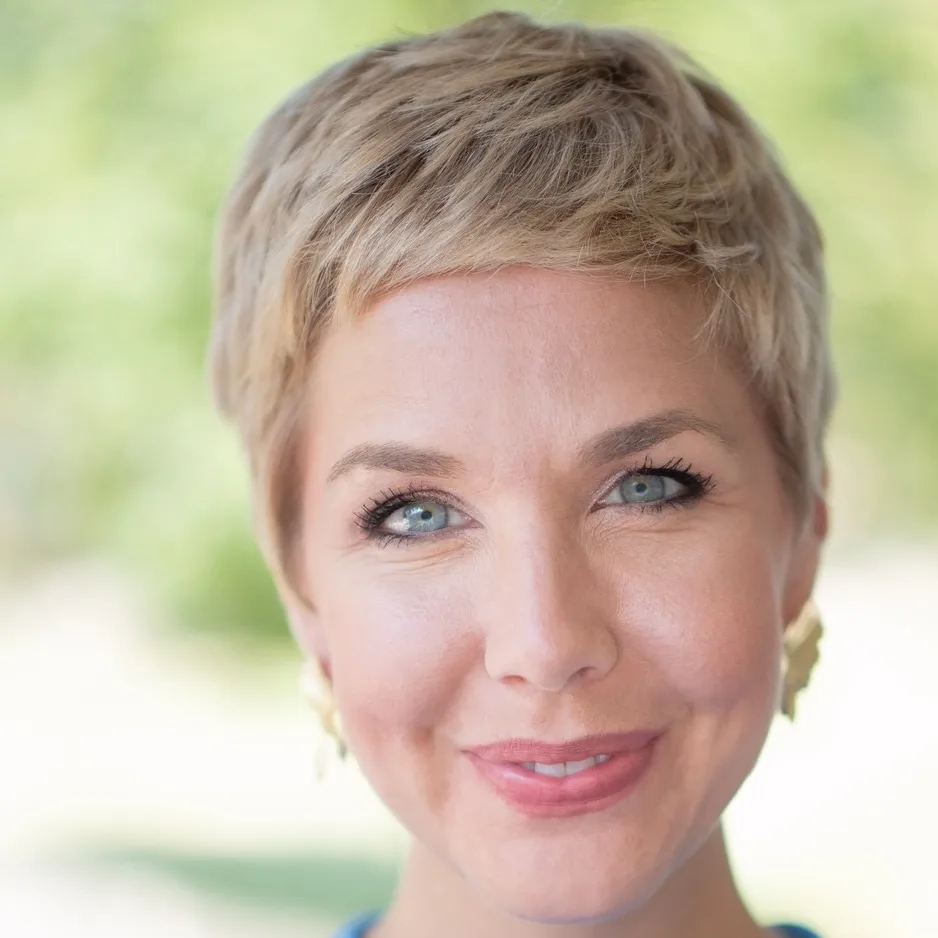
Erin Loechner
The Opt-Out Family: How to Give Your Kids What Technology Can’t
Founder of the global tech-free movement The Opt-Out Family, Erin Loechner is a former social media influencer who walked away from a million fans to live a low-tech lifestyle—and is now teaching others how to do the same. Her cutting-edge work has been praised in the New York Times, the Washington Post, the Wall Street Journal, and the Huffington Post, as well as on the Today Show. When she’s not scrawling on her trusty steno pad, Erin, her husband, and their three kids spend their days chasing alpenglow, reading Kipling, and biking to town for more tortillas.
Summary:
In this interview, you’ll hear about a family who is demonstrating what it looks like to opt out. Erin Loechner walks us through what it looks like for her family to live a low-tech, tech-free lifestyle. She talks about when she realized that AI “isn’t just a tool” and that “tech isn’t neutral”. She’ll challenge you to ask “what’s another way?” before defaulting to the easy tech solution, whether that’s for a school waiver or an app to sign your child up for soccer. And if you’ve ever worried your kid will be “the only one without a phone,” her advice is useful. Talking to Erin was inspiring; even if you aren’t able to completely opt out, it is helpful to see someone who is questioning the necessity of all the tech in our lives and using community connection as part of the solution.
Links:
If you want to own the entire conference, upgrade here.

HOME | TERMS & CONDITIONS | © 2026 HAPPILY FAMILY | PRIVACY POLICY | CONTACT US